
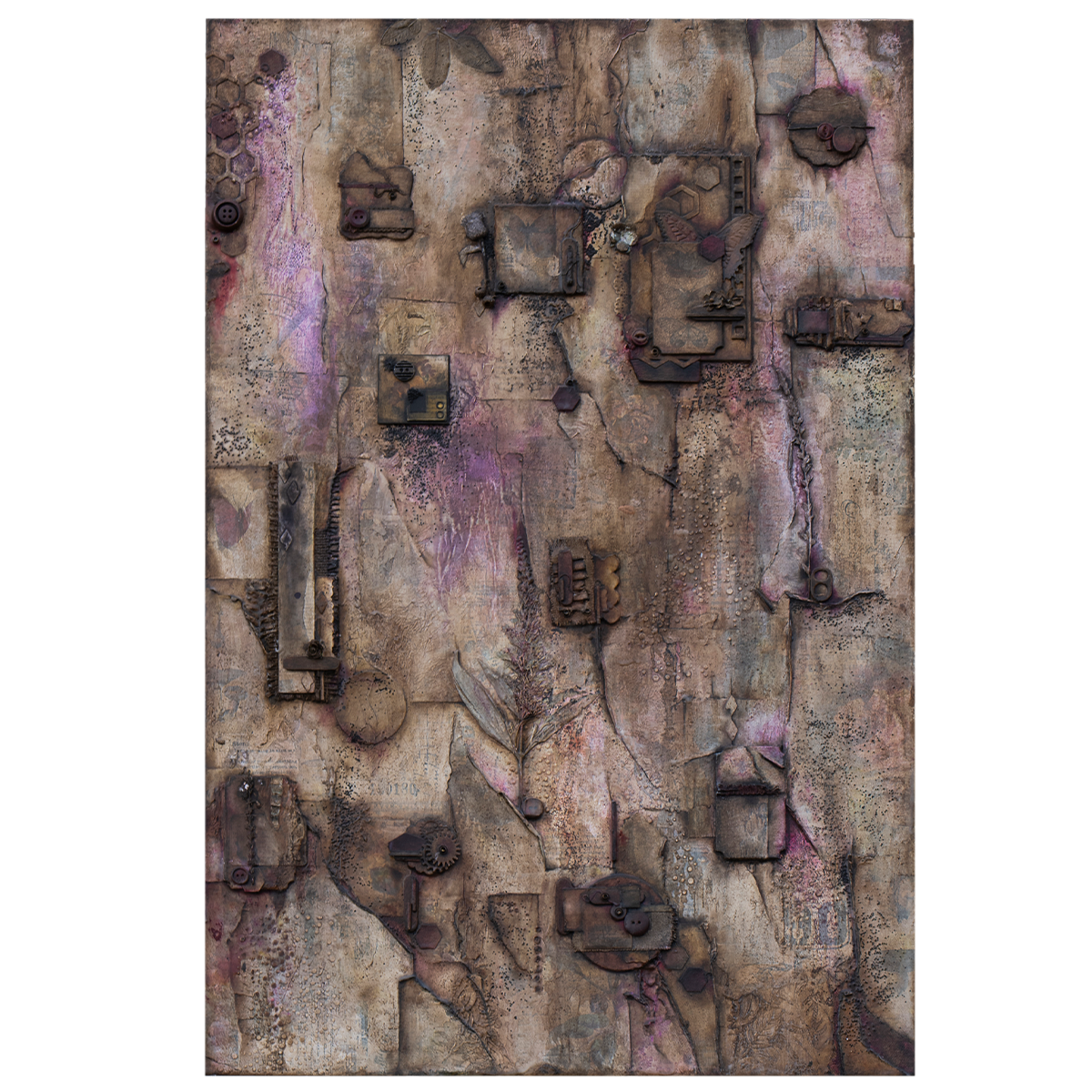
Specimen Cabinet
Textured Mixed Media Wall Art Inspired by Nature in Pink Tones
| Medium | Mixed media on canvas |
| Dimensions | 510mm x 760mm |
| Editions | Unique work 1 of 1 |
| Material Notes | Watercolour, acrylic inks, oil paint, collage, found fragments, botanicals, hot beeswax, sand |
| Price | £1,900 |
This work is built like an archive. Nature imagery, flowers, butterflies, fungi, sits alongside fragments of old print embedded into the background, a way of holding what would otherwise be lost. The collage is integrated, distressed, stained, and worked back into the surface until it reads as one weathered skin.
Layers of watercolour, acrylic ink, and oil create a muted ground where images appear, soften, and return. Between these layers, hot beeswax is applied and left to set, then remelted and swept back across the surface, creating natural flow lines and runs that feel like weather moving through the piece. Grains of sand are encapsulated within the wax, adding a dry, mineral texture, like sediment held in a tide line.
What matters most in my work is that beauty holds at every scale. Each inch must stand on its own, the meeting of edges, the convergence of colour, the way a layer is distressed as it shifts into the next. As you step back, those small moments have to keep working, until the full surface resolves into something whole, and still rewards close looking.
For me, worn textures and botanical elements are not opposites, they belong together. Nature is perfect in bloom, and perfect in decay, just as every season has its own integrity, from the bleakest winter to the abundance of spring. The human fragments in Specimen Cabinet are a reminder that coexistence is possible, not when nature is controlled or erased, but when it is allowed to return, converge, and take its place within what we build.
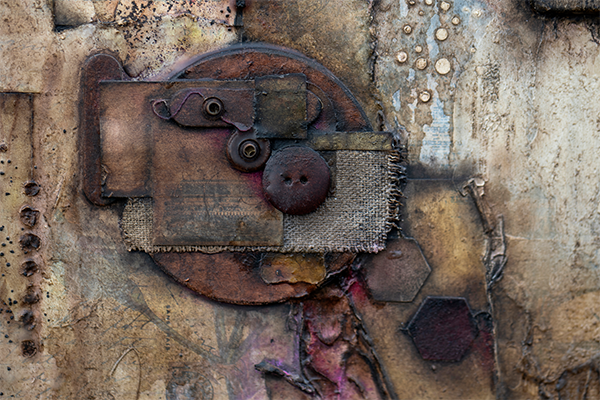
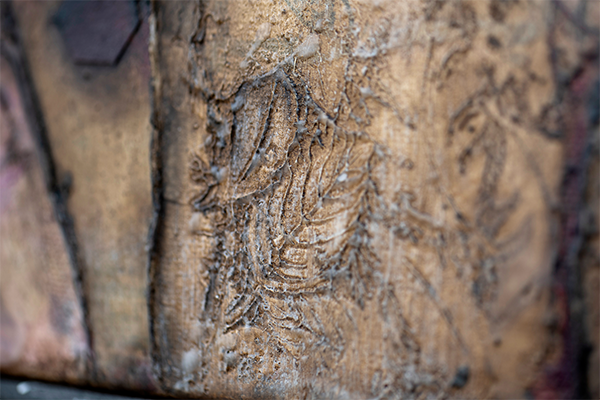
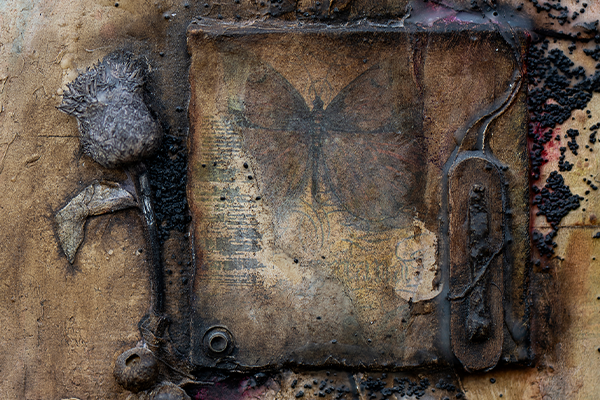
Specimen Cabinet is suited to interiors that favour texture, detail, and a sense of material history. Its layered surface and muted palette create a quiet presence, making it particularly effective in living spaces, studies, or more intimate environments where close viewing and subtle detail are appreciated.
At this scale, the piece offers both structure and intimacy. From a distance, it reads as a cohesive, weathered surface; up close, individual elements and embedded materials emerge, inviting slower, more attentive viewing.
It pairs naturally with materials such as wood, linen, stone, and aged metals, making it well suited to interiors that value tactility, restraint, and a connection between natural forms and constructed space.